
Why Study Personality?
A Journey from Pattern to Presence
Discover a new way of seeing personality—not as something to fix, but as something to understand. Go beyond self-improvement and into self-revelation. Learn how the Enneagram becomes a mirror rather than a map, revealing how consciousness organizes itself, forgets itself, and finds its way home again.
The Enneagram as Revelation, Not Definition

In Why Study Personality?, John Harper reclaims the Enneagram from the increasingly popular tendency to use it as a system of identification. This is not a book about defining oneself more accurately or becoming a more effective version of a familiar identity. It’s a book about personality as a functional, adaptive structure—and then, it presents methods to see through it. —Suzanne Dion
- Certified Enneagram of Personality Teacher and Coach
- Co-author with David Daniels, M.D. “The Enneagram, Relationships, and Intimacy”
- Co-founder, The Attuned Parent Project (TAPP)
A Mirror for Consciousness
Exploring Personality as the Architecture of Perception
This book invites you to look beyond personality as a set of traits and see it as the way awareness organizes itself into identity. It’s a contemplative study of how the self forms, forgets, and remembers. Through the lens of the Enneagram, it reveals personality not as something to improve, but as something to see through—an elegant distortion pointing back to what we truly are.
This is not a typology guide or a system for self-optimization. Why Study Personality? is something different. It’s a way of perceiving yourself, others, and consciousness itself with new eyes. It’s about seeing how the patterns that define us are the very clues that can free us.
Lens of Perception
Seeing the Enneagram as a Living Geometry of Awareness
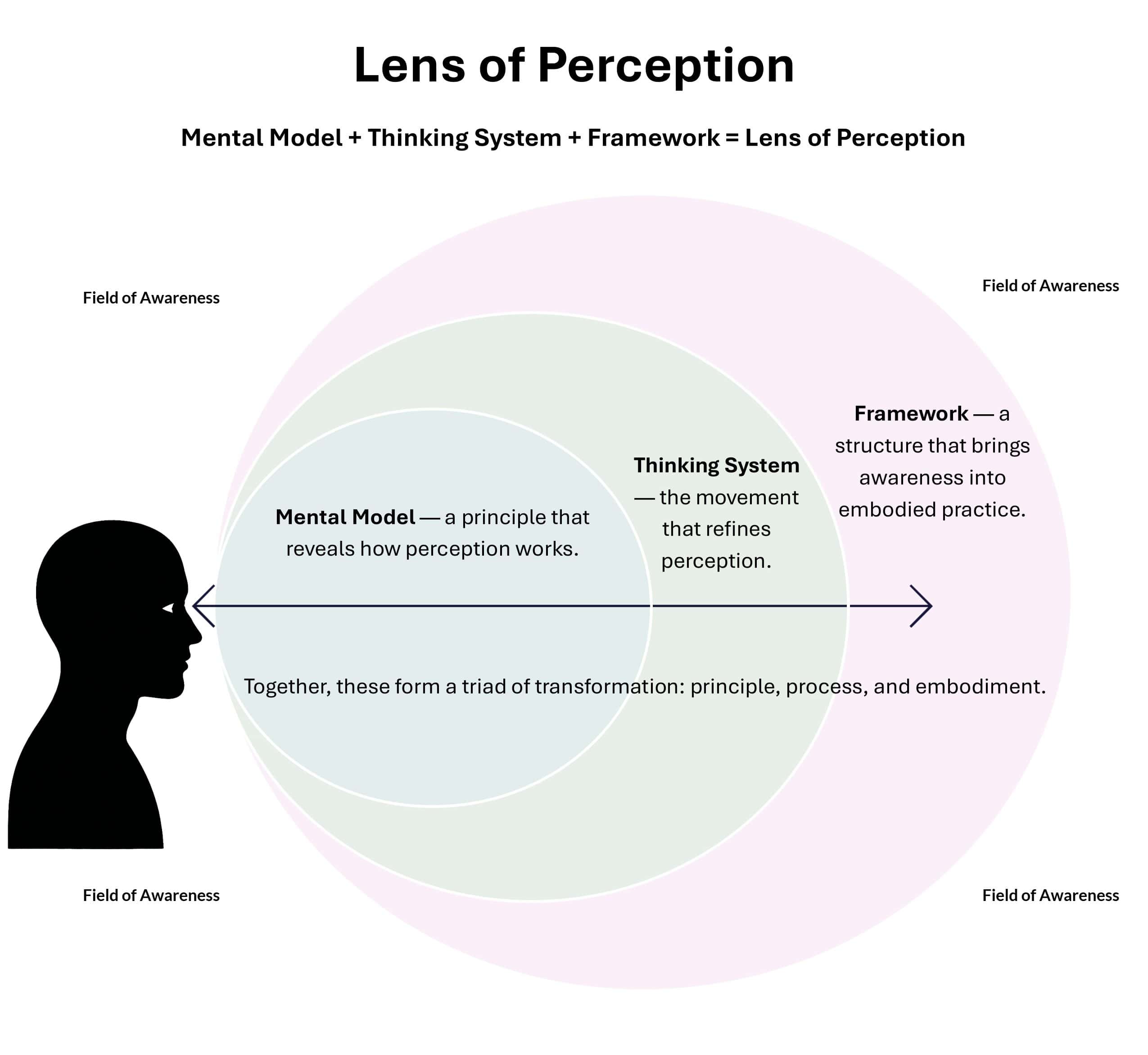
The diagram below illustrates how this book approaches the Enneagram—not as a fixed typology, but as a lens of perception. Each combination of mental model, thinking system, and framework forms a way of seeing—a triad that reveals how consciousness organizes, distorts, and can rediscover itself.
The Mental Model reflects the principle behind perception—the way awareness interprets experience.
The Thinking System shows the movement of that perception as it refines or defends itself.
The Framework translates insight into embodied practice, turning awareness into lived understanding.
Each Enneagram type expresses one of these lenses—one way perception loops back on itself, mistaking the echo for the source. By studying the interaction of model, system, and framework, we begin to see how our type structures attention and filters reality.
In this way, the Enneagram becomes not a personality system but a geometry of consciousness—a living map of how awareness moves through principle, process, and embodiment. The work is not to fix the type, but to see through it—until perception itself becomes transparent, and what remains is simply awareness aware of itself.
Essential Study
When you understand both the structure and essence of personality, you begin to see yourself not as someone to fix or define, but as awareness learning to see itself. A pattern to be understood. A mystery revealing itself through inquiry, reflection, and the quiet undoing of what you thought you were.
Table of Contents
The Question.
The Human Mechanism
The Mirrored Self
The Path Beyond Type
Type 1. The Search for Rightness
Type 2. The Gift and Hunger for Love
Type 3. The Performer and the Loss of Value
Type 4. The Romantic and the Longing for Depth
Type 5. The Observer and the Retreat from Knowing
Type 6. The Loyalist and the Loss of Faith
Type 7. The Enthusiast and the Flight from Pain
Type 8. The Challenger and the Illusion of Control
Type 9. The Peacemaker and the Illusion of Harmony
The Path Beyond Personality
Perception and the Enneagram
Perception is the movement through which consciousness becomes aware of itself in form. It is not simply the brain interpreting sensory data, but the living interface where awareness meets the world it has imagined into being. Every perception is both revelation and distortion—a gesture of knowing that also shapes what is known.
Through the lens of the Enneagram, perception takes on a distinct architecture. Each type represents a patterned way of perceiving reality—an orientation of attention that turns the fluid openness of Being into a particular world. What we call “personality” is the habitual organization of perception: how awareness filters experience through preference, defense, and identity.
Seen this way, the Enneagram is not a system of types but a study of perception itself—how consciousness forgets its transparency and mistakes its reflections for reality. When perception becomes clear, the pattern softens. The perceiver and the perceived are no longer separate, and experience returns to its source: awareness simply knowing itself.
About the Author
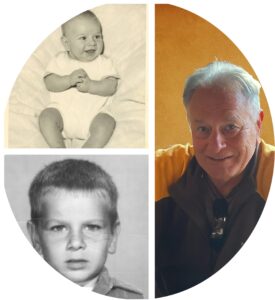
John Harper is a Diamond Approach® teacher, Enneagram guide, and lifelong student of human development whose work bridges psychology, spirituality, and deep experiential inquiry. His flagship project, The Inner Architecture Trilogy—Why Study Personality?, The Alchemy of Perception, The Enneagram as Living Process, explores the fundamental structures of consciousness from three interconnected dimensions: perception, process, and vibration.
He is also the author of Nurturing Essence: A Compass for Essential Parenting, The Enneagram World of the Child: Nurturing Resilience and Self-Compassion in Early Life, works that illuminate how essence shapes early psychological development. All titles are available on Amazon.