How Sound Shapes the Soul of a Child
Long before words, there is rhythm. Before meaning, there is melody. In the earliest months of life, when the body is still learning how to breathe and the nervous system is a quivering field of impressions, sound is the first bridge between isolation and intimacy. In Nurturing Essence: A Compass for Essential Parenting, this truth sits at the heart of development: relationship is not formed through ideas, but through resonance—the living vibration between beings. This theme finds its deeper counterpart in our book Good Vibrations: Primordial Sounds of Existence, which explores resonance not merely as an acoustic phenomenon, but as the very pulse of creation—the same sacred hum that shapes both cosmos and child. Sound is the invisible cord that keeps mother and child attuned even before the eyes meet. It is the first language of belonging—wordless, tender, and profoundly formative.
The Acoustic Womb
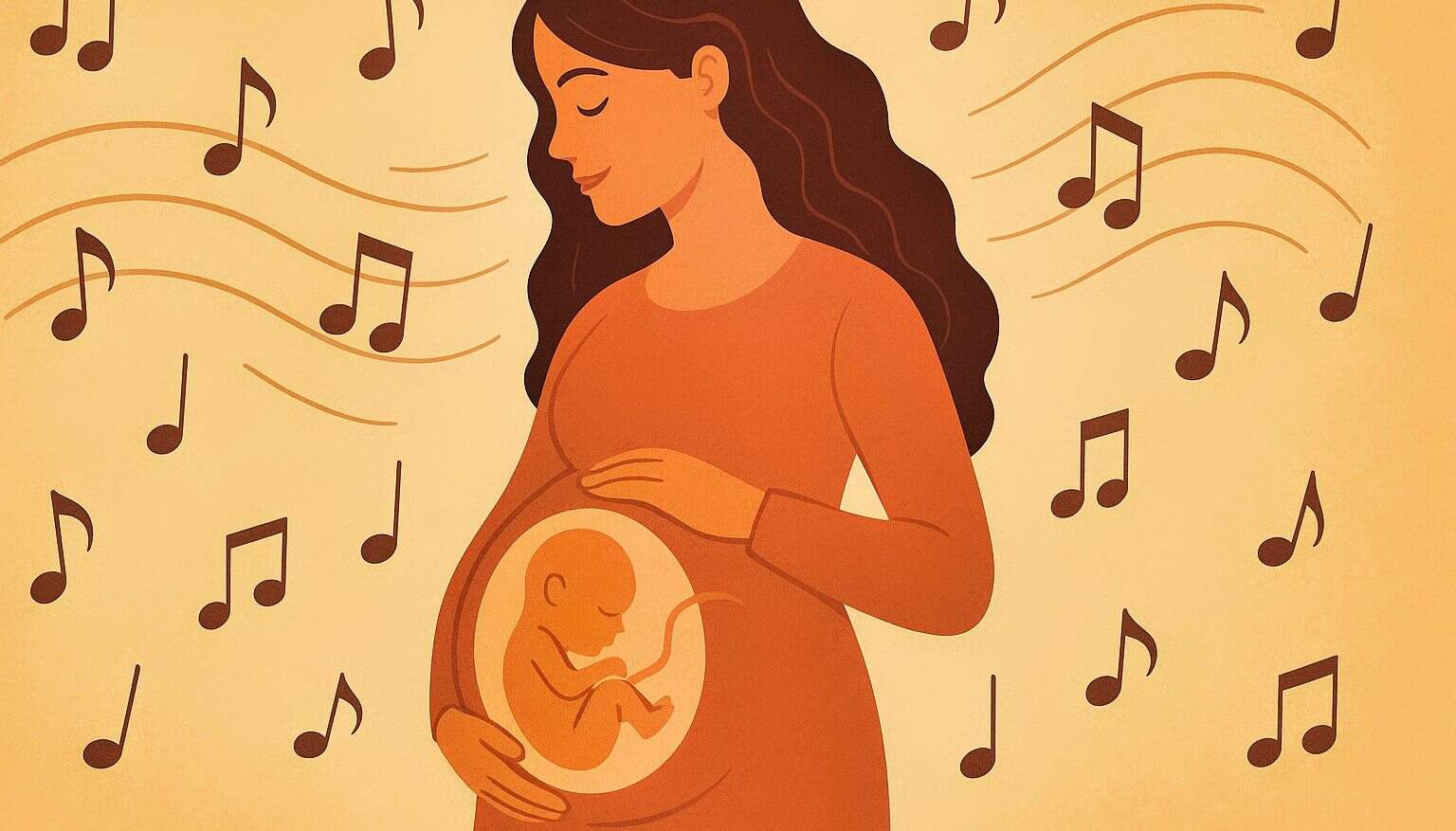
The story of sound begins before birth. Within the womb, the child floats in a world of rhythm—the syncopation of heartbeat, the pulse of blood, the rise and fall of breath. These inner symphonies become the earliest patterns of order. By the final trimester, the fetus already distinguishes melody and tone, and studies show that newborns recognize songs they heard in utero weeks later¹. This continuity of sound becomes a kind of soul-memory: the first whisper of familiarity in a world that will soon overwhelm with light and noise. The womb’s acoustic landscape is more than comfort; it is instruction. Each sound gently teaches the developing brain about rhythm, repetition, and relation—that life moves in cycles and coherence. When we later hold a crying infant and instinctively hum, we are recreating that prenatal universe. Our humming isn’t learned behavior; it’s remembrance.
The Voice as Regulator
Once the child emerges into the world’s brightness, sound remains the tether to safety. The newborn cannot yet reason, but it can resonate. The mother’s voice becomes the new heartbeat, stabilizing breath, temperature, and emotion. In neonatal units, research shows that premature infants exposed to live lullabies or soft maternal speech exhibit calmer heart rates, improved sleep, and greater weight gain². These are not sentimental outcomes; they are biological truths. Through tone, the mother regulates the infant’s nervous system long before the child learns self-soothing. Every coo, sigh, and hum acts like a tuning fork, aligning the baby’s scattered energies with the parent’s steadier rhythm. The human voice thus becomes the infant’s first nervous system—a sound-based bridge of co-regulation. Yet there is something deeper at play. Beneath the physiological effects, the parent’s voice conveys a felt sense of being—warmth, safety, presence. The baby doesn’t merely hear the mother; it feels her aliveness vibrating through tone. The voice transmits not just emotion but essence.
The Lullaby of Relationship
Cooing, babbling, and nonsense syllables are sacred dialogues—the first songs of love. These early sound exchanges are not trivial; they are the architecture of attachment. When a parent mirrors a baby’s coo, they are saying without words, “I see you.” Neuroscience shows that such moments of mutual sound-making activate circuits for empathy and emotional regulation³. The duet of voices—one ancient, one new—creates a field of resonance where self and other merge. This is the music of becoming: the way two nervous systems find harmony before either knows the concept of “relationship.” The parent sings, the child responds, and between them, a living frequency forms—a pulse that will shape all future experience of connection. In Good Vibrations, this same principle extends to all of existence: vibration as the bridge between separation and unity. The resonance between mother and child mirrors the universe’s rhythm—the eternal dance between silence and sound, stillness and movement.
The Brain Learns Through Song
The infant brain is musical by design. Long before language comprehension, the auditory cortex is mapping rhythm and tone. Structured sound—songs, patterns, repeated lullabies—strengthens neural coherence and enhances prefrontal function⁴. This is how music teaches attention and anticipation: the gentle expectancy before the rhyme resolves, the satisfaction of a familiar cadence. When a caregiver sings, they are not just soothing; they are sculpting the brain’s architecture for learning. Music lays the foundation for language, memory, and emotional intelligence⁵. The melodies of infancy become the syntax of understanding. This insight reveals why singing to a baby is both a biological and a spiritual practice. It tunes the brain, but also the heart. It teaches coherence—the harmony between what is felt, what is known, and what is yet to be discovered.
The Resonance of Presence
Not every sound calms. The tone behind the words—the presence within the voice—determines how vibration is received. A distracted “shhh” carries a different frequency than one rooted in calm attunement. The infant’s developing perception is exquisitely sensitive to these subtleties. In the Diamond Approach, essence is known through direct experience—the felt texture of Being itself. The parent’s voice, when rooted in presence, transmits that essence in the most literal way. When we speak or sing from a quiet center, the child hears more than comfort; they sense the coherence of reality. The vibration itself communicates truth. This is resonance as teaching—not through explanation, but through example. The voice becomes a doorway through which the infant feels the world’s benevolence.
The Field of Belonging
Every act of singing, cooing, or whispering contributes to a shared field—a resonance that enfolds both parent and child. Studies show that when a mother sings, both her breathing and the baby’s begin to synchronize, and their heart rhythms align⁶. Oxytocin levels rise, softening stress and heightening connection⁷. In these small, ordinary moments, we glimpse a sacred pattern: two beings moving into coherence, reminding one another of the unity that underlies all existence. In that shared field, the child learns the deepest lesson of all—that to be is to belong. This is where Nurturing Essence: A Compass for Essential Parenting and Good Vibrations: Primordial Sounds of Existence meet: the recognition that resonance is both developmental and divine. The same pulse that regulates a newborn’s heart beats through galaxies and stars. The same vibration that carries a mother’s song also carries the music of existence itself.
When Sound Becomes Silence
As the child grows, the mother’s song gradually moves inward. The external hum becomes an inner rhythm—the soundless resonance of self-regulation. The child who was once soothed by lullabies now finds stability in the silent echo of remembered presence. To nurture essence is to recognize that every early vibration lives on in the soul’s memory. The sound of safety becomes the tone of trust; the rhythm of holding becomes the heartbeat of courage. The resonance of love becomes the music of the self. In this way, parenting is not about protection or instruction but about tuning—helping the child come into harmony with themselves and, through that harmony, with the world.
The Invitation to Listen
Modern life has grown loud, but not resonant. The hum of technology has replaced the pulse of presence. Babies are often soothed by devices rather than voices, entertained by screens rather than sung to. Yet the research—and the heart—agree: nothing replaces the human voice. Its vibration carries consciousness itself. To return to singing, to cooing, to humming softly as you hold your child—this is not nostalgia. It is renewal. Every note restores the original intimacy between Being and becoming. So hold your baby close. Let your breath slow. Hum the old melody, or make a new one. Let your voice rise not from performance, but from presence. Let it be imperfect and true. In that moment, you are doing more than soothing your child—you are revealing the nature of love itself. You are teaching the world to listen again.
Endnotes
- Partanen, E. et al. “Learning-Induced Neural Plasticity in the Human Fetus.” Proceedings of the National Academy of Sciences (PNAS), 2013.
- Filippa, M. et al. “Live Maternal Speech and Singing Have Beneficial Effects on Hospitalized Preterm Infants.” Acta Paediatrica, 2013.
- Cirelli, L. et al. “Interpersonal Synchrony Increases Prosocial Behavior in Infants.” Developmental Science, 2014.
- Trainor, L. J. & Zatorre, R. J. “The Neurobiological Basis of Musical Emotions.” Trends in Cognitive Sciences, 2009.
- Persico, G. et al. “Music and the Infant Brain.” Frontiers in Psychology, 2021.
- Fancourt, D. & Perkins, R. “Effect of Singing Interventions on Well-being and Stress in Mothers and Infants.” Psychology of Music, 2018.
- Feldman, R. “The Neurobiology of Affiliation: Plasma Oxytocin Levels Across Pregnancy and the Postpartum Period Predict Mother–Infant Bonding.” Psychological Science, 2007.
John Harper is a Diamond Approach® teacher, Enneagram guide, and student of human development whose work bridges psychology, spirituality, and deep experiential inquiry. His newest book, Nurturing Essence: A Compass for Essential Parenting, invites parents to discover the role essence plays in child development. He is also the author of The Enneagram World of the Child: Nurturing Resilience and Self-Compassion in Early Life and Good Vibrations: Primordial Sounds of Existence, available on Amazon.