
The Difference Between Tension and Attention
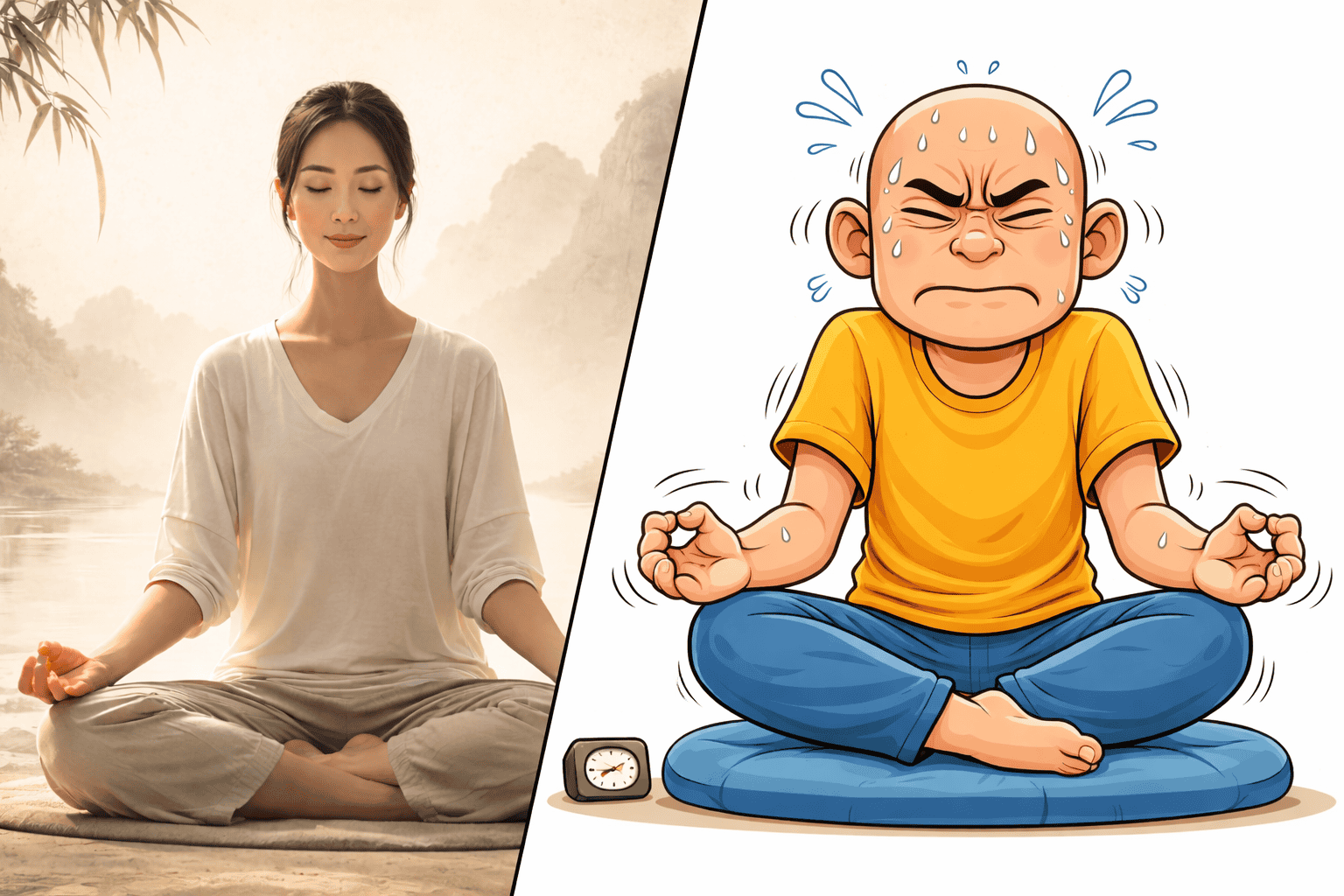
There is a particular face people make when they are “trying” to meditate.
Brows pulled together.
Jaw set.
A subtle tightening behind the eyes.
It is the face of effort, and it rests on a misunderstanding. Focus does not require force. Concentration does not require contraction. Meditation does not require a furrowed forehead. Clarity is not created by squeezing.
Not Returning — Just Beginning
Even the language of “bringing the mind back” can quietly introduce struggle. It implies that something went wrong, that you left, and that you must now correct yourself. But what if nothing went wrong? Instead of returning, simply begin. Wherever you are — lost in thought, calm, irritated, distracted — just begin from there.
No correction.
No internal scolding.
No scorekeeping.
Just begin from where you are. Again. And again. This shifts the practice from control to orientation. Awareness does not need to be dragged back. It simply becomes aware of what is already happening.
Relaxing Without Dimming
There is an important distinction to make.
Relaxing is not the same as fading.
Softening is not the same as collapsing.
In meditation, consciousness can slide into dullness — a hazy, almost-sleep state that feels quiet but lacks clarity. That is not the relaxation we’re speaking of. True relaxation keeps awareness bright.
The spine remains naturally upright.
The breath remains alive.
The field of perception stays clear.
You release muscular and mental tension without losing alertness. Ease and clarity deepen together.
The Balance of Ease and Precision
If there is clarity without ease, the forehead scrunches. If there is ease without clarity, awareness dims. But when ease and clarity coexist, attention becomes steady and vivid. The body softens. The mind sharpens. No contraction required.
Clarity is more like adjusting a lens than tightening a grip. You refine alignment rather than apply pressure.
Tension as Teacher
As practice unfolds, noticing tension itself becomes part of meditation. A faint contraction in the brow. A subtle brace in the belly. A mental push to “do this right.” When tension is seen, allow it to release.
Notice.
Relax.
Clarify.
The system unwinds. Awareness brightens. Not through force — but through the removal of unnecessary effort. Meditation matures not by trying harder, but by interfering less. And something remarkable happens when contraction dissolves: attention stabilizes on its own.
No scrunched forehead.
No internal struggle.
Just clear, steady presence.
If this way of practicing resonates — relaxed yet precise, grounded yet vibrant — you may find a deeper exploration in Good Vibrations: The Primordial Sounds of Existence.
That book explores how sound, breath, and vibration naturally stabilize awareness without muscular strain. Rather than forcing concentration, primordial sounds like OM and HU entrain the nervous system into coherence. Attention gathers not by contraction, but through resonance.
Meditation does not have to be tightly focused to be powerful.